

Mesh vs. Upholstered Office Chairs: Which Is Better for You?

In this article
Mesh and upholstered office chairs can both support a full workday, but they create different experiences. Mesh usually prioritizes airflow, a responsive feel and a lighter visual profile. Upholstery usually offers softer initial contact, more finish options and a traditional appearance. Neither material is automatically more ergonomic.
The better choice is the chair that fits your body, work habits and room. Seat depth, lumbar placement, armrest range, seat height and recline behaviour usually matter more than the covering alone. Use material as one decision factor after confirming that the chair can be adjusted correctly.
Quick comparison
| Factor | Mesh | Upholstered |
|---|---|---|
| Airflow | Generally higher through an open weave | Usually lower, depending on fabric and foam |
| Feel | Responsive and often firmer | Cushioned and often softer initially |
| Appearance | Technical, modern and visually light | Warm, traditional or executive |
| Cleaning | Dust can settle inside the weave | Spills can absorb into fabric or foam |
| Fit priority | Edge shape and mesh tension | Foam density and cushion shape |
What counts as a mesh chair?
A mesh chair may use an open woven backrest, a suspended mesh seat, or a combination of mesh back and upholstered seat. These designs should not be grouped as if they feel identical. A flexible backrest can follow the torso differently from a fully suspended seat, while a foam seat provides a familiar base under a ventilated back.
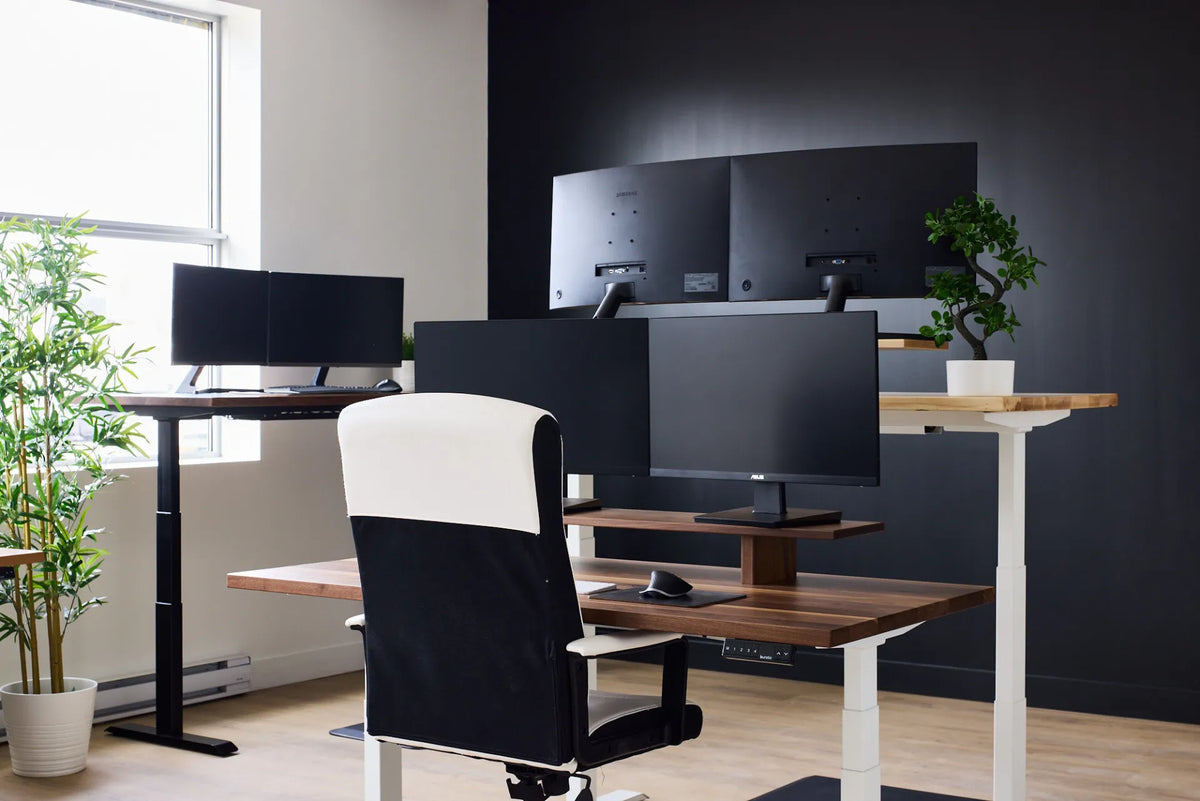
The photographed Burotic chair uses a black mesh back with a cushioned black seat, adjustable armrests and a headrest. This hybrid approach illustrates why shoppers should look beyond simple material labels.
Advantages of mesh
Airflow
Open mesh allows more air to move around the back than a solid padded shell. That can be useful in warm rooms, sunny offices or shared environments where temperature preferences vary. Airflow does not replace climate control, but it can reduce the enclosed feeling of a thick backrest.
Responsive support
Well-tensioned mesh distributes contact across the back and can flex with small movements. Quality matters. Mesh that is too loose may feel unsupportive, while a rigid edge or overly tight panel can create pressure. Examine the frame around the shoulder blades, lower back and thighs.
Visual simplicity
Mesh chairs often appear less bulky in a compact home office. The transparent weave lets light pass through and can make the chair feel less dominant beside a wood desk or in a multipurpose room.
Possible drawbacks of mesh
Mesh quality varies widely. An exposed frame edge may contact the thighs or shoulders if the chair is too small. A suspended mesh seat can feel firm to someone who prefers cushioning, and damaged mesh is not always practical to repair. Dust, lint and pet hair can also settle inside the weave.
Test the chair in normal clothing. A surface that feels pleasant through denim may feel different through light summer fabric. Check that the front edge does not create pressure and that the backrest supports the lower back rather than simply stretching behind it.
Advantages of upholstery
Cushioned contact
Fabric over foam can provide a softer initial feel and distribute pressure through the cushion. Comfort depends on foam density, shape and long-term resilience, not thickness alone. Excessively soft foam can allow the pelvis to sink unevenly and can make position changes harder.
More aesthetic choices
Upholstery is available in many colours, textures and finishes. It can suit a formal office, hospitality setting or home interior where the chair is expected to resemble other furniture.
Warmth
A padded back and seat can feel warmer in a cool room. For some users that is comfortable; for others it becomes a drawback during long sessions.
Possible drawbacks of upholstery
Fabric and foam can absorb spills, odours and moisture. Cleaning requirements depend on the textile, and aggressive products can discolour or weaken it. Thick padding can also hide a poor seat shape during a short test. Evaluate the chair after at least 20 minutes instead of relying on the first soft impression.
Leather and coated alternatives form a separate category. They may wipe clean more easily than woven fabric, but can feel warmer and require material-specific care. Do not assume every upholstered surface should be treated with the same cleaner.
Which material is better for long hours?
There is no universal winner. For long workdays, prioritize fit and movement: feet supported, knees around hip level, space behind the knees, lumbar contact, relaxed shoulders and controls that are easy to reach. The Canadian Centre for Occupational Health and Safety recommends breathable, non-slip seat fabric, adjustable height and tilt, a supportive backrest and a stable five-point base.
A mesh back with an upholstered seat is a practical middle ground for many people. It combines back ventilation with a cushioned sitting surface. A full-mesh design may appeal to users who run warm, while a fully upholstered model may suit someone who values softness and a residential appearance.
How climate and room use change the answer
Canadian offices experience both heated winters and warm summers. In a stable climate-controlled space, either material can work. In a room with afternoon sun or inconsistent air conditioning, mesh airflow may matter more. In a cool basement office, upholstery may feel more inviting.
Also consider whether the chair is used by one person or shared. A shared chair needs a broad adjustment range and durable surfaces. Material alone cannot compensate for a seat that is too deep, armrests that interfere with the desk or a lumbar curve that misses the user.
Maintenance comparison
Vacuum mesh with a soft attachment and use minimal moisture for spots. For upholstery, vacuum seams and follow the textile code or manufacturer instructions. Address spills quickly in both cases. Avoid solvents, abrasive brushes and saturation unless the manufacturer explicitly permits them.
Our mesh chair cleaning guide provides a complete routine. During cleaning, inspect the frame, casters and adjustment controls so wear is noticed early.
Seven questions to ask before buying
- Does the seat depth leave about three finger widths behind your knees?
- Can both feet remain supported at the correct desk height?
- Does the lumbar area meet the natural lower-back curve?
- Do frame edges stay away from the thighs and shoulders?
- Can you recline without losing contact with the backrest?
- Will the material suit the room temperature and cleaning demands?
- Can you test the chair long enough to move past the first impression?
Burotic options to consider
The Loop Ergonomic Chair combines a breathable mesh back with adjustable lumbar support, seat-depth adjustment, 3D armrests and infinite recline locking. The Peak Ergonomic Chair is another fully adjustable Burotic option. Compare their controls and proportions using our ergonomic chair fit guide, not material alone.
Final recommendation
Choose mesh if airflow, a responsive back and a lighter visual profile lead your priorities. Choose upholstery if cushioning, warmth and finish options matter more. For many Canadian workspaces, a mesh back with an upholstered seat offers a balanced compromise.
Whatever material you prefer, fit comes first. Test seat depth, lumbar placement, armrests and recline, then consider care requirements and room temperature. A chair that supports comfortable movement will serve you better than one selected only for appearance or a few seconds of showroom softness.

Previous article
Office Chair Tilt Mechanisms Explained: Synchro, Knee and More
Next article
How to Adjust an Office Chair for Hip Comfort