

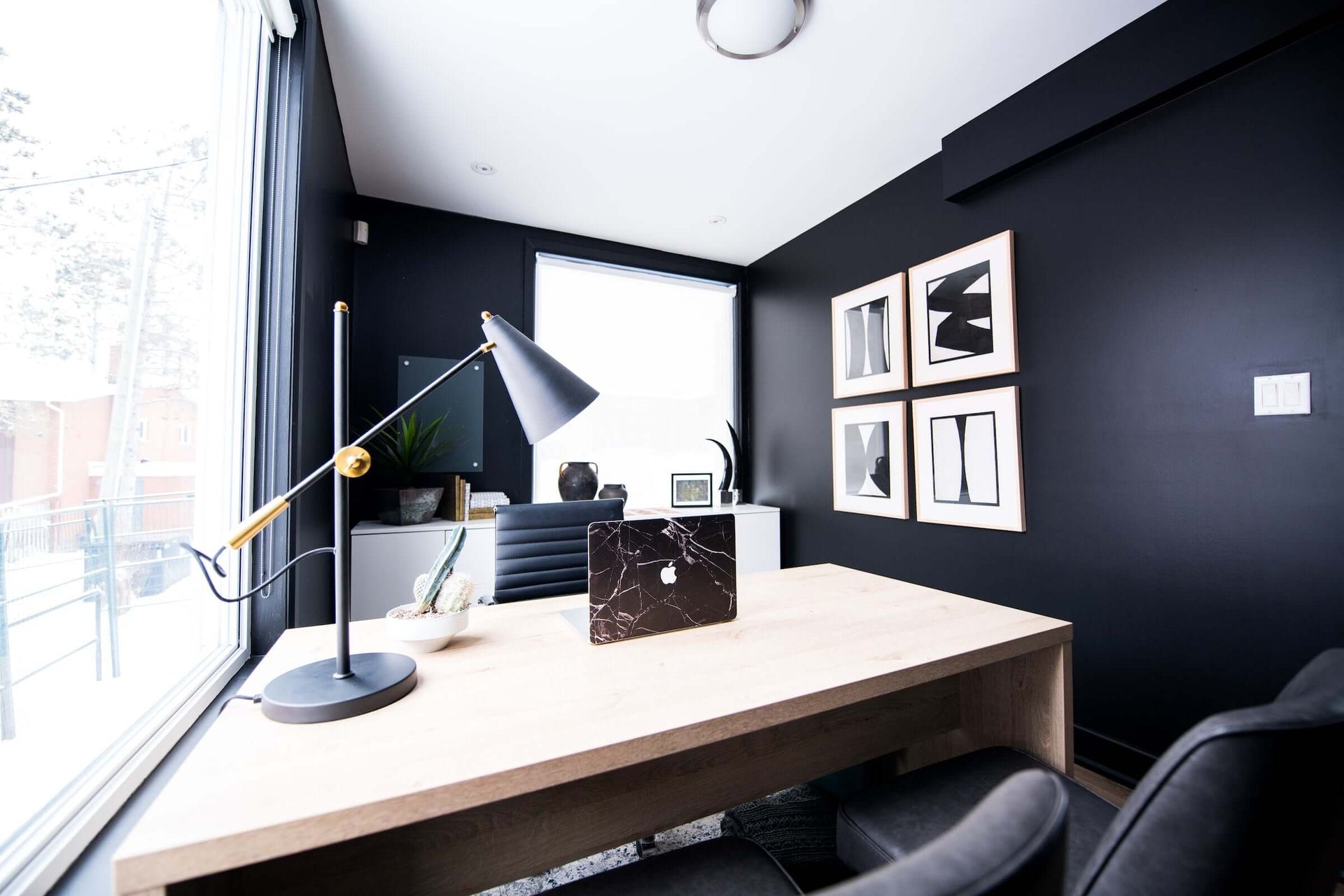
Small Office Ideas: Make More of a Compact Workspace
Practical small-office ideas for choosing the right desk, using vertical storage, managing cables and keeping the room comfortable.

In this article
A small office does not need miniature versions of everything. It needs a clear priority: enough room for the main task, safe circulation and storage that does not crowd the work surface. Careful measurements matter more than decorative tricks.
Map the room before buying
Record wall lengths, door swings, baseboards, outlets, windows and heating equipment. Mark the chair’s pull-back area and the path through the room. For an adjustable desk, include clearance at the highest position and ensure nearby shelves or windows will not interfere.
Choose the smallest desk that supports the task
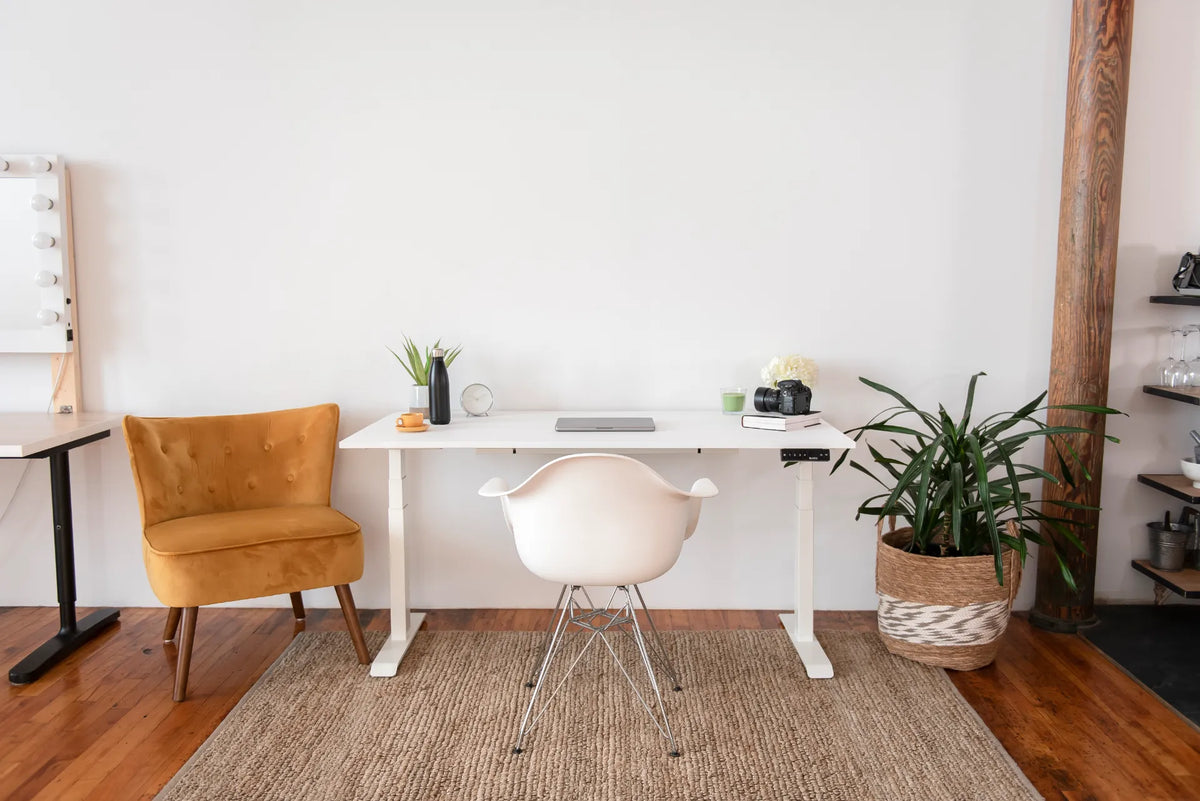
List the equipment that must remain on the surface and arrange paper templates to test a desktop size. A laptop setup needs less depth than large monitors and reference documents. The Aspire Laminate Standing Desk is available as a current option to evaluate, but confirm its dimensions against the room before choosing.
Use vertical space selectively
Wall shelves and tall storage can free the floor, but they should not create head hazards or make the room feel top-heavy. Keep frequently used items between comfortable shoulder and hip height. Store archives higher or farther away.
Free the desktop
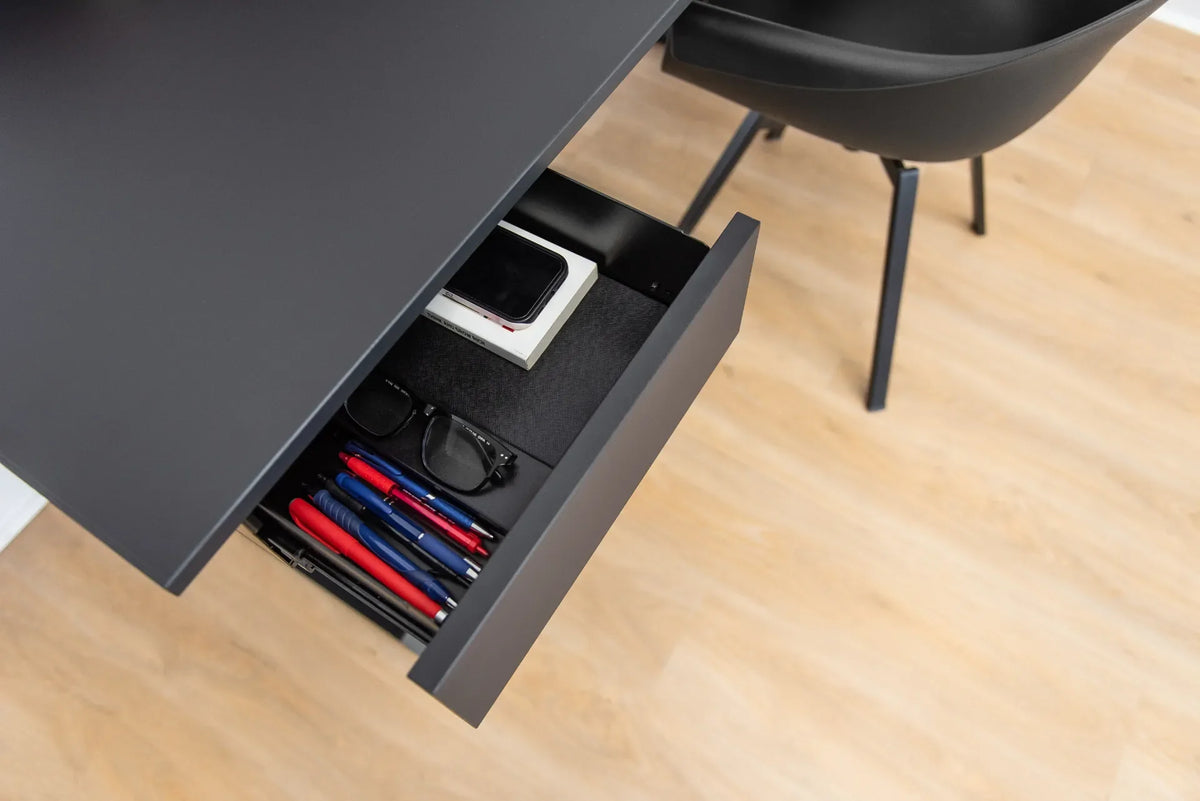
A compatible monitor arm can reduce the monitor footprint, while a desk drawer can move small supplies below the surface. Avoid adding organizers that occupy more space than the objects they hold.
Make cables follow the furniture
Route power and data along one planned path. Use a cable management solution and leave enough slack for movement. Keep power bars accessible and away from feet, chair casters and heating sources.
Use light to keep the room functional
Place the screen to control window glare, use a task lamp for paper and keep tall furniture from blocking useful daylight. Light-coloured walls may reflect more light, but the result depends on window orientation and finishes.
Let furniture perform more than one job
Choose storage that can also support a printer or supplies, and use a desk shape that follows the room. Multifunctional should still mean safe and convenient. A surface that requires constant clearing is not truly efficient.
Keep one visual resting area
Not every wall and corner needs storage. One uncluttered area can make the room easier to use and reduce visual competition during calls or focused work.
Test the plan at full scale
Use painter’s tape or cardboard to mark the desk and chair footprint. Sit in the planned position and check reach, screen distance and circulation. A compact office works when every item earns its space and the main task remains comfortable.
Previous article
Office Colour Ideas: How to Build a Calm, Focused Workspace
Next article
Home Office Boundaries: Design for Better Work-Life Balance