


Office Plants: How to Choose and Place Them Responsibly
Choose office plants according to light, care, allergies, pets and safe placement, without overstating air-quality claims.

In this article
Plants can add texture, colour and a connection to nature in an office. They should be chosen like any other workspace element: for the actual conditions, the people using the room and the maintenance available. Avoid treating a few pots as an air-cleaning system or a substitute for ventilation.
Assess the light first
Observe direct and indirect light over a full day. A bright window does not mean every position receives suitable light, and winter conditions in Canada may differ sharply from summer. Match the plant to the location rather than moving the desk into glare for the plant.
Choose for realistic care
Decide who waters, checks pests and handles vacations. Select robust species suited to the available light and care frequency. Labels such as low maintenance still require a routine and correct watering.
Consider allergies, sensitivity and pets
Shared offices should consider fragrance, pollen, mould concerns and employee sensitivity. At home, verify plant toxicity through a qualified horticultural or veterinary source if pets or young children can reach it. Do not label a plant hypoallergenic or pet-safe without reliable species-specific information.
Place plants safely
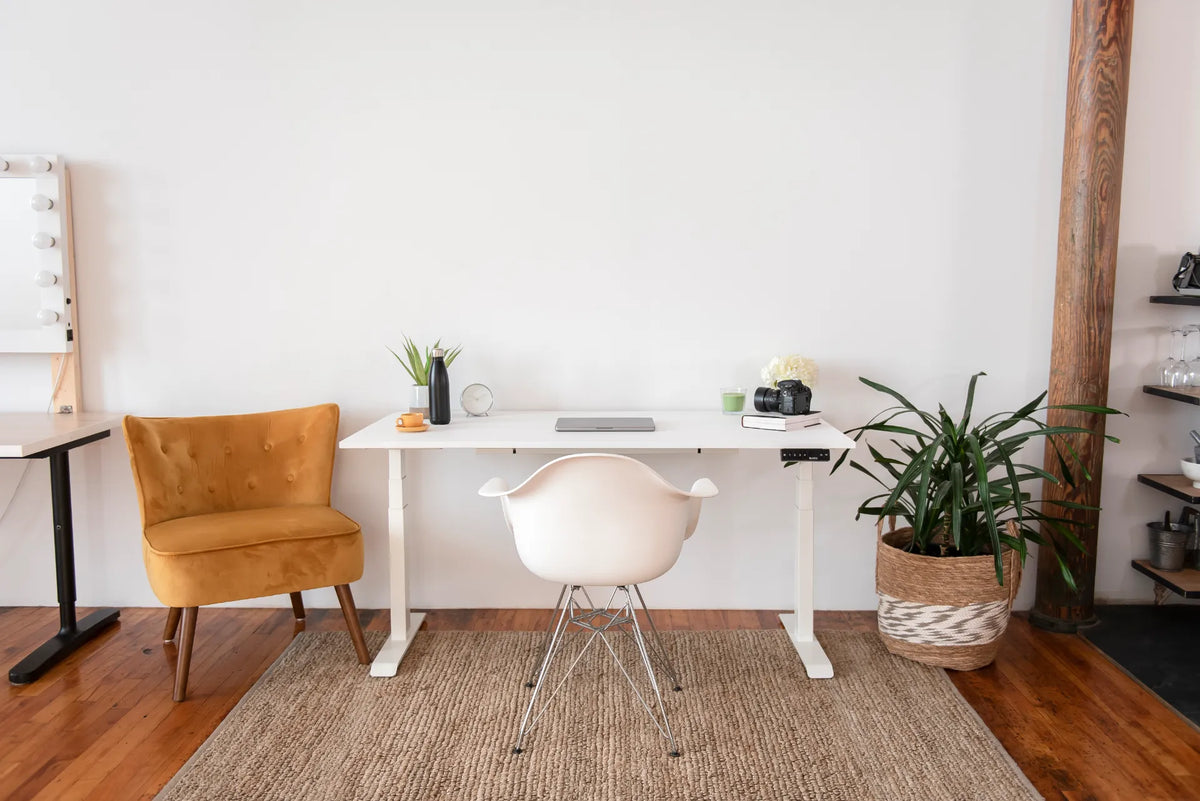
Keep pots away from keyboard and power equipment, use waterproof saucers and avoid overhead placements where a container could fall. Plants should not reduce monitor visibility, block exits or interfere with an adjustable desk. A monitor stand is for equipment, not a wet plant pot.
Protect the desk surface
Moisture can remain beneath a pot long after watering. Lift containers regularly, dry the saucer and inspect the surface. This is especially important on a solid wood desk. Follow the current furniture care instructions.
Use plants as part of a wider design
A field study of indoor plants in office settings explored employee perceptions and wellbeing, but results should not be turned into promises for every workplace. Plants work best alongside adequate light, ventilation, acoustic control and functional furniture.
Create a simple maintenance plan
- Assign responsibility for watering and inspection.
- Record the species and care needs.
- Quarantine or treat pests promptly.
- Remove standing water.
- Reassess placement as daylight changes.
Start small
Add one or two plants, observe how they perform and expand only when care is consistent. A healthy, well-placed plant contributes more to the room than a crowded collection that blocks work or damages surfaces.
Previous article
Home Office Boundaries: Design for Better Work-Life Balance
Next article
Solid Wood Desk Benefits: Is It the Right Material for You?