

Why Does My Office Chair Keep Sinking? Causes and Safe Fixes

In this article
An office chair that slowly sinks during the workday is more than an annoyance. It changes the relationship between your elbows, desk, screen, hips and feet, often forcing you to readjust repeatedly. In most height-adjustable chairs, the problem is related to the pneumatic gas lift, the height-control lever or the linkage between them.
This guide explains how to identify the likely cause without guessing, which checks are safe for most owners and when to stop and contact the manufacturer. A gas cylinder is a pressurized component. Do not drill, puncture, heat, cut or open it. If your chair is under warranty, begin with the seller or manufacturer before attempting a repair.
How an office chair height adjustment works
A typical ergonomic chair uses a gas lift between the five-point base and the seat mechanism. Moving the height lever activates a pin or linkage at the top of the cylinder. With your weight off the chair, the seat rises. With weight on the chair, it lowers. Releasing the lever should let the valve close and hold the selected height.
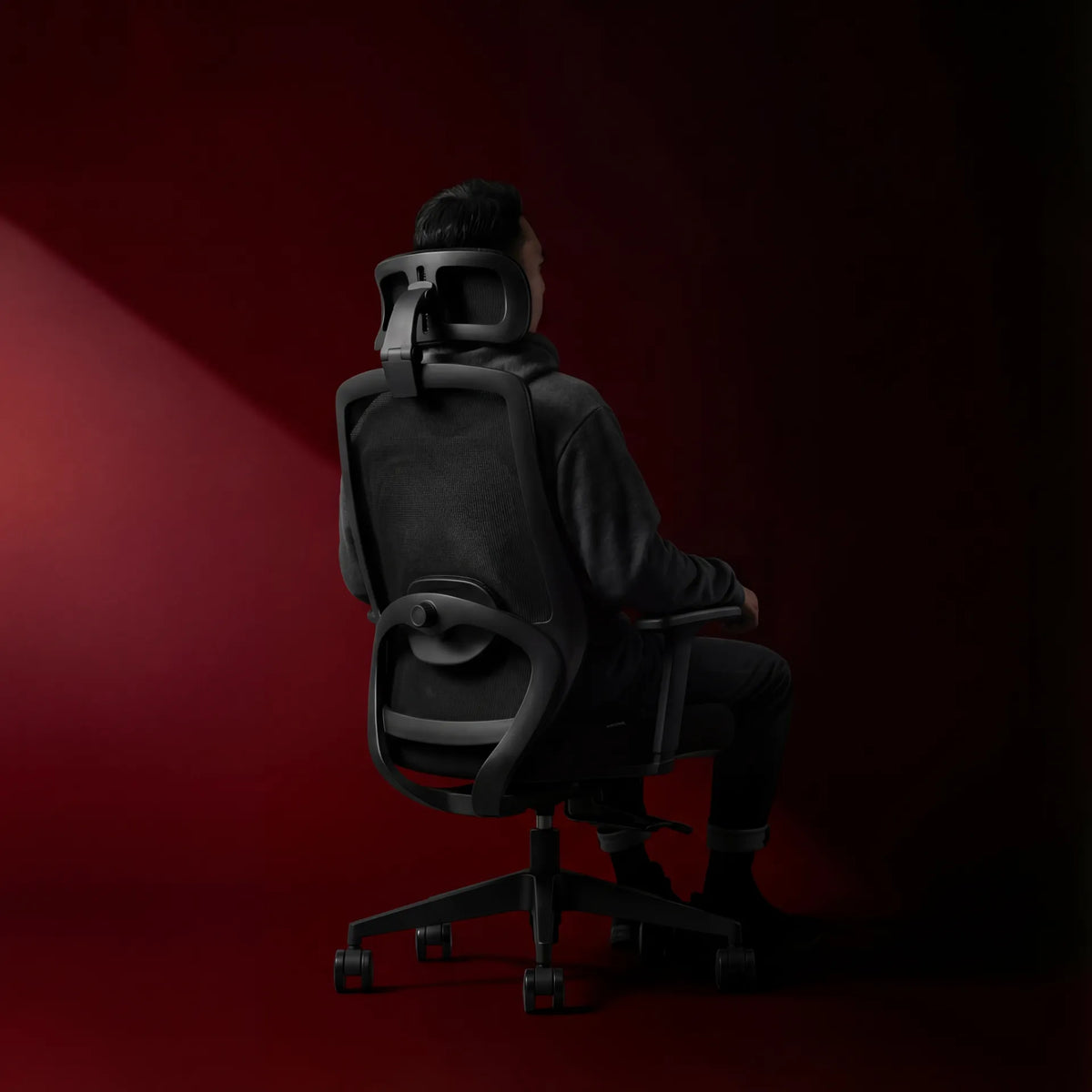
The Burotic chair in the photo is shown from the side, so the cushioned seat, mesh back, headrest, armrest, central lift column, five-point base and casters are clearly visible. The image shows the parts involved in seat height, but it does not indicate that this particular chair is defective.
Why does an office chair keep sinking?
1. The gas lift can no longer hold pressure
The most common cause is wear inside the pneumatic cylinder. Seals can deteriorate with age and use, allowing the chair to lose height when weight is applied. A chair that rises normally but sinks gradually after you sit down often points to the cylinder rather than the lever.
A failed seal is internal. Lubricating the exterior or tightening unrelated screws will not restore pressure. A compatible replacement cylinder is normally the durable repair.
2. The height lever is staying engaged
A bent lever, loose cable or misaligned actuator can keep light pressure on the cylinder valve. The chair may then lower even though the cylinder itself can still hold pressure. This is especially plausible if the problem began after assembly, moving the chair or working underneath the seat.
3. The linkage is loose or incorrectly positioned
Some chairs use a direct metal lever while others use a cable or plastic linkage. If a fastener loosens or a cable housing slips, the control may not fully release. The exact design varies, so use the chair manual rather than assuming one mechanism matches another.
4. The cylinder is not seated correctly
A recently assembled chair may feel unstable if the tapered connections between the cylinder, base and seat mechanism are not fully seated. This usually causes movement or looseness rather than gradual sinking, but it is worth checking before ordering parts.
5. The replacement part is incompatible
If the issue started after a previous repair, the cylinder travel, diameter, activation pin or overall height may not match the chair. A part that fits into the base is not automatically compatible with the seat mechanism or intended height range.
A five-minute diagnosis
- Set the chair to a known height. Place a small piece of removable tape on the lift column or measure from the floor to the front edge of the seat.
- Sit normally for 10 minutes. Avoid touching the height lever. Measure again. A measurable drop under load suggests that the valve is opening or the cylinder is losing pressure.
- Test the chair without weight. Raise the seat, step away and wait. If it holds while empty but sinks when occupied, the gas lift is the leading suspect.
- Observe the lever. Confirm that it returns freely to its neutral position. Do not force it or remove covers unless the manual allows it.
- Listen and feel. A sudden release, visible looseness or unexpected movement is a reason to stop using the chair until it is inspected.
Safe checks before replacing anything
Confirm the adjustment technique
To raise most pneumatic chairs, take your weight off the seat while lifting the control. To lower the chair, remain seated while operating it. If the seat only moves when the lever is used, the chair may be functioning normally.
Inspect visible fasteners
With the chair empty and stable, look for loose screws around the control housing, seat plate and lever. Tighten only user-serviceable fasteners identified in the manual, using the correct tool. Do not overtighten plastic components.
Check for obstruction
Packaging material, a shifted cover or an object caught near the lever can interfere with the control. Remove only obvious external obstructions. Keep fingers away from pivot points and springs.
Review warranty and service options
Manufacturers often treat pneumatic cylinders and mechanisms as service parts. Herman Miller, for example, directs customers to the seller or dealer for product service and notes that pneumatic cylinders are covered components under its applicable warranty. The exact coverage for your chair depends on its brand, purchase date and terms.
Temporary fixes versus a proper repair
Online guides sometimes suggest hose clamps, spacers or rigid sleeves that prevent the seat from moving below one fixed height. These approaches may stop the immediate drop, but they disable normal adjustment and do not repair the failed valve. They can also create sharp edges or interfere with covers.
A fixed-height workaround is not ideal for a shared chair or an ergonomic workstation. The Canadian Centre for Occupational Health and Safety recommends adjusting chair height to the user, with feet supported and appropriate clearance behind the knees. A chair locked at the wrong height can create a new fit problem.
The more complete solution is a compatible replacement cylinder or manufacturer-authorized service. If the chair is inexpensive, heavily worn in several areas or has structural damage, replacement may be more sensible than repairing one component.
Can you replace a gas lift yourself?
Some manufacturers provide user-replaceable cylinders and instructions. Others recommend dealer service. Cylinder removal can require significant force because the tapered joints tighten during use. Improvised striking or gripping can damage the base, mechanism or surrounding surfaces.
If the manufacturer supplies instructions, follow them exactly. Protect the floor and eyes, keep bystanders away and use only the specified tools. Never apply heat, puncture the cylinder or place it in a vise across the pressurized tube. If the part is seized or the procedure is unclear, use a qualified repair service.
How to choose a replacement cylinder
- Confirm the chair model and production version.
- Match the manufacturer part number when available.
- Verify minimum and maximum seat height after installation.
- Check the cylinder travel and overall length.
- Confirm the upper and lower connection dimensions.
- Respect the chair manufacturer’s user-weight and component requirements.
- Ask whether replacing the part affects warranty coverage.
A so-called universal cylinder may fit many chairs, but compatibility should never be assumed. The safest source is the chair manufacturer, original retailer or an authorized service provider.
When to stop using the chair
Stop using the chair if the seat drops suddenly, the base is cracked, the cylinder is visibly bent, the mechanism separates, a caster socket is damaged or the chair tilts unexpectedly. A sinking seat alone is usually a service issue, but combined movement or structural damage increases the risk of a fall.
Do not continue testing by repeatedly dropping your weight onto the seat. Move the chair away from the workstation and label it if other people might use it.
Restore the ergonomic setup after repair
Once the chair holds its height, adjust it from the floor upward. Keep the feet supported, place the knees around hip level, leave clearance behind the knees and bring the desk or keyboard close to elbow height. Our office chair height guide explains the sequence, while the chair fit guide covers seat depth, lumbar placement and armrests.
If you are replacing an older chair rather than repairing it, compare the adjustment range of the Loop Ergonomic Chair and the Peak Ergonomic Chair. Choose according to verified dimensions and fit, not only appearance.
The practical answer
If an office chair rises but sinks under load, the gas lift is the most likely cause. If the chair lowers even when empty or the lever feels stuck, inspect the control linkage first. Confirm the symptom, check visible user-serviceable parts and contact the seller before dismantling anything.
A compatible cylinder can extend the useful life of an otherwise sound chair. A damaged base, unstable mechanism or unclear pressurized-component repair calls for professional service or replacement.

Previous article
Best Standing Desk Accessories: 8 Upgrades That Actually Help
Next article
8 Simple Standing Desk Exercises and Movement Breaks for Work