

8 Simple Standing Desk Exercises and Movement Breaks for Work

In this article
A standing desk creates an opportunity to change position, but standing still is still a static posture. The real benefit comes from alternating between sitting, standing and short periods of easy movement. A few controlled exercises can interrupt stiffness without requiring special clothing or turning the office into a workout space.
The movements below are general wellness suggestions, not medical treatment. Stop if you feel pain, dizziness, numbness or unusual shortness of breath. Anyone with an injury, balance concern, pregnancy-related restriction or medical condition should ask an appropriate health professional which movements are suitable.
The Burotic photo shows a woman working while standing at a light wood desk beside a large industrial window. A laptop, external monitor, mouse, monitor stand and small accessories are visible. The clear standing posture makes the image directly relevant to a guide about movement during desk work.
Why movement breaks matter more than perfect posture
The Canadian Centre for Occupational Health and Safety states that there is no single sitting position recommended for everyone and encourages changes in position. Its sit-stand guidance also notes that prolonged standing may lead to discomfort in the feet, knees, hips and back. The goal is not to replace all sitting with standing. It is to reduce long, uninterrupted periods in either posture.
A movement break can be brief. Walking to refill a glass, taking a call away from the screen or completing 30 seconds of calf raises all count as changes. Frequency and consistency are usually more practical than one long exercise session at the desk.
Before you move: make the area safe
- Move the chair, mat edges, cables and bags out of the path.
- Wear footwear that feels stable on the floor.
- Lock rolling casters before using a chair for support, if the chair is designed to lock.
- Do not pull on a height-adjustable desktop or monitor arm for balance.
- Keep both feet near the floor for any new movement.
- Use a wall or stable fixed surface if balance is uncertain.
- Choose a range that feels easy and controlled.
A desk is designed to support work equipment, not dynamic body weight. Avoid desk push-ups, deep leaning or any movement that loads the desktop unless the manufacturer explicitly approves that use.
1. Weight shifts
Stand with the feet about hip-width apart and knees relaxed. Shift your weight gradually toward the right foot, return to the centre, then move toward the left. Keep both feet in contact with the floor.
Continue for 30 to 45 seconds. This is a discreet way to reduce stillness during a call or while reading. The movement should be small enough that the hips remain level and the upper body stays relaxed.
2. Calf raises
Place the feet parallel and hold a stable surface lightly if needed. Lift both heels slowly, pause briefly on the balls of the feet and lower with control. Start with 8 to 12 repetitions.
Do not bounce or rush. If both heels together feel unstable, alternate one heel at a time. Calf raises can also be replaced with ankle pumps while seated.
3. Gentle marching
March in place with a small step, lifting each foot only as high as comfortable. Keep the torso tall and let the arms move naturally if there is room. Continue for 30 to 60 seconds at an easy pace.
This movement is useful between focused tasks because it raises movement slightly without requiring floor space. Avoid it around loose cables or on a thick mat that catches the toes.
4. Shoulder rolls
Let the arms rest by the sides. Draw the shoulders gently upward, backward and down in a smooth circle. Complete five repetitions, then reverse the direction.
The circle should stay comfortable. Avoid forcing the shoulders into a large range. Pair the movement with a slow exhale to release unnecessary tension.
5. Chest and upper-back reset
Bring the forearms in front of the body with the palms facing each other. Open the arms gently while drawing the shoulder blades toward each other, then bring the arms forward and allow the upper back to widen. Repeat six to eight times.
Keep the ribs relaxed rather than arching the lower back. This is a movement, not a long aggressive stretch.
6. Sit-to-stand transitions
Place a stable chair behind you. Sit with the feet supported, lean forward slightly from the hips and stand using the legs. Reverse the motion slowly until seated. Start with five repetitions.
The chair should not roll away. Do not use a wheeled chair unless its casters can be secured reliably and the manufacturer permits it. If balance is uncertain, use a fixed chair or omit the exercise.
7. Standing hip extension
Stand tall with one hand on a stable support. Move one straight leg a short distance behind you without leaning forward or arching the lower back. Return and repeat five to eight times before changing sides.
The movement should come from the hip and remain small. It can be useful after long sitting, but it should not create pinching or back discomfort.
8. A short walk
The simplest desk exercise is often leaving the desk. Walk to a printer, water station, window or colleague and return. Even one or two minutes changes the loading pattern more than shifting between two static positions.
When possible, place routine tasks at a reasonable distance rather than keeping every object within arm’s reach. Convenience is useful for focused work, but small reasons to walk can support a more varied day.
A five-minute movement sequence
| Time | Movement |
|---|---|
| 0:00 to 0:45 | Weight shifts |
| 0:45 to 1:30 | Calf raises |
| 1:30 to 2:30 | Gentle march |
| 2:30 to 3:15 | Shoulder rolls |
| 3:15 to 4:00 | Chest and upper-back reset |
| 4:00 to 5:00 | Short walk |
This sequence is intentionally light. It can fit between meetings without creating fatigue or perspiration. Adjust the duration to the space and your current capacity.
How often should you take a movement break?
There is no universal schedule that fits every body, task and workplace. CCOHS recommends regular rest breaks and varying posture. A practical starting point is to use natural work transitions: stand after a meeting, walk after completing a focused block and perform one small movement when changing desk height.
If you routinely ignore time-based reminders, connect movement to an event instead:
- After sending a report, walk for one minute.
- When the phone rings, stand or shift position.
- After a video meeting, complete shoulder rolls.
- Before lunch, take a slightly longer walk.
- When lowering the desk, perform five controlled sit-to-stands.
The best cue is the one you can follow without disrupting essential work.
Movement is not the same as standing longer
Standing for hours to compensate for sitting is not the objective. Long static standing can create fatigue, especially on hard floors. Alternate positions before discomfort becomes strong. The Burotic sit-stand transition guide offers a gradual approach.
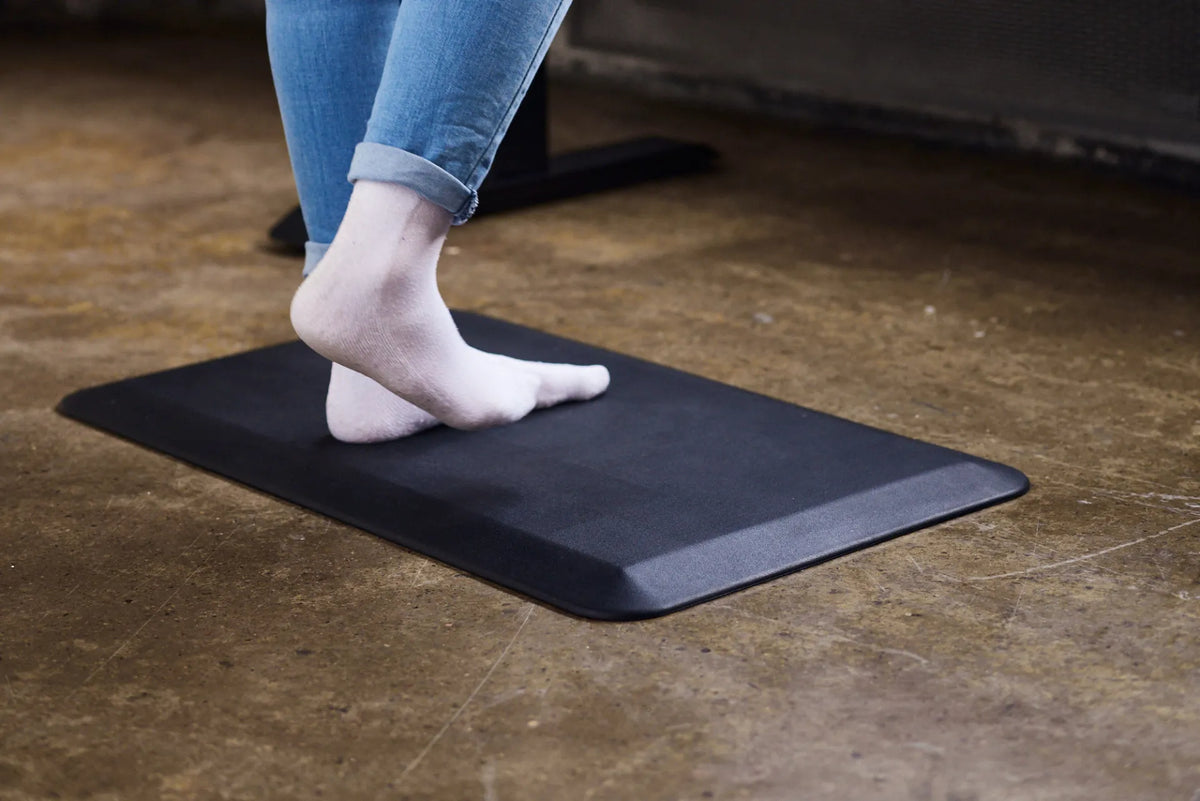
An anti-fatigue mat may make hard flooring more comfortable, but it does not replace walking or sitting breaks. Keep its edges clear and move it away when it interferes with the chair.
Set the desk before adding movement
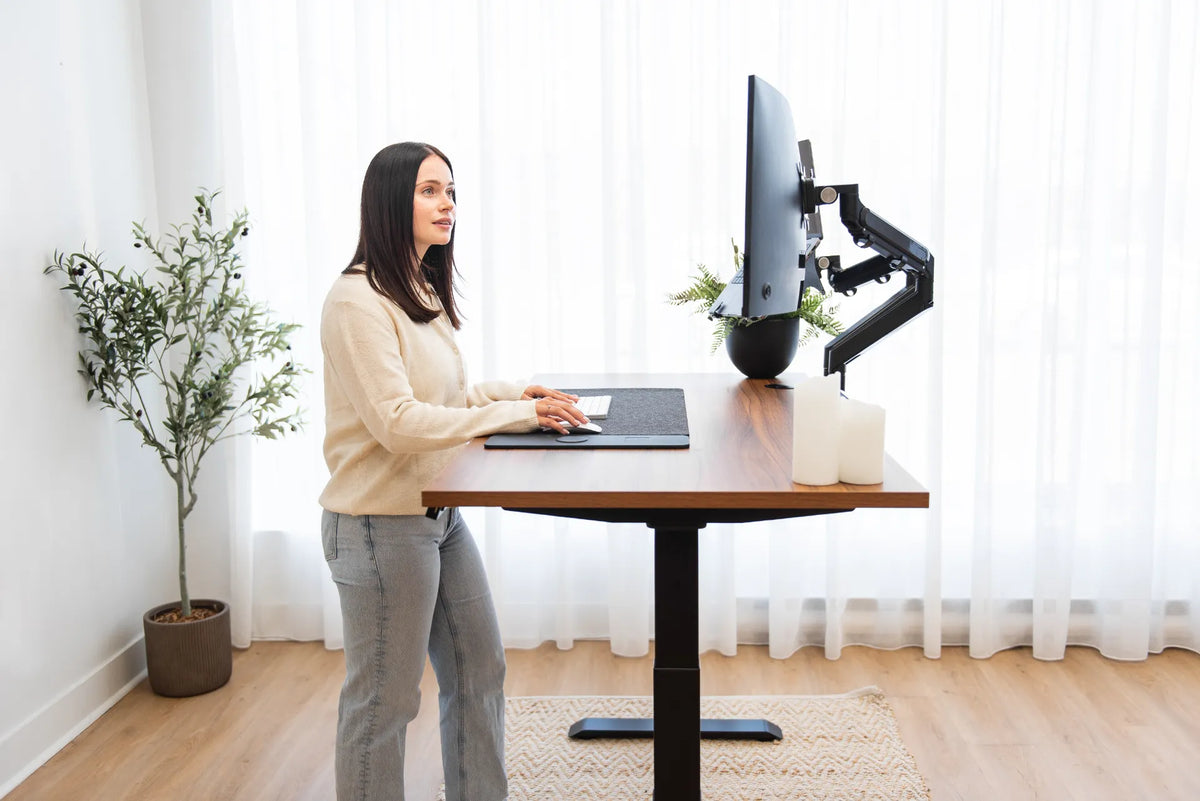
At standing height, place the frequently used keyboard and mouse near elbow level, keep the shoulders relaxed and position the screen so you do not repeatedly bend the neck. If the workstation itself is poorly adjusted, movement breaks will not correct the problem.
The Aspire Solid Wood Standing Desk and other height-adjustable Burotic configurations allow the work surface to alternate between sitting and standing heights. Use verified product dimensions and the memory preset guide to make transitions easier.
Movements to approach cautiously
Deep squats, fast lunges, desk push-ups, single-leg balances and large twisting motions may be appropriate exercise for some people, but they are less suitable for a shared workspace and carry greater balance or equipment risk. Save demanding movements for a clear area and appropriate exercise setting.
Neck circles and forceful stretching also deserve caution. Gentle range-of-motion movements are preferable to pulling on the head or pushing into pain.
Build a workday with more variety
A useful pattern combines supported sitting, comfortable standing, small movements and short walks. None of these needs to dominate the entire day. The desk is a tool for changing position, not a requirement to remain upright.
Start with one cue and two movements that feel easy. Once the habit is reliable, add variety. Consistent low-intensity breaks are more sustainable than an ambitious routine that disappears after a few days.
Previous article
Why Does My Office Chair Keep Sinking? Causes and Safe Fixes
Next article
Best Standing Desk Accessories: 8 Upgrades That Actually Help