

Solid Wood vs. Laminate Standing Desk Tops: How to Choose

In this article
The surface is the part of a standing desk you see and touch all day. It also contributes to the desk's weight, care routine, visual character and long-term repair options. That makes the solid wood vs. laminate desk decision more important than a simple colour choice.
Neither material is universally better. Solid wood appeals to buyers who value natural variation and repairability. Laminate offers consistent appearance, straightforward care and a lower entry cost in many configurations. The right choice depends on the room, the work and how you expect the surface to age.
What is a solid wood desk top?
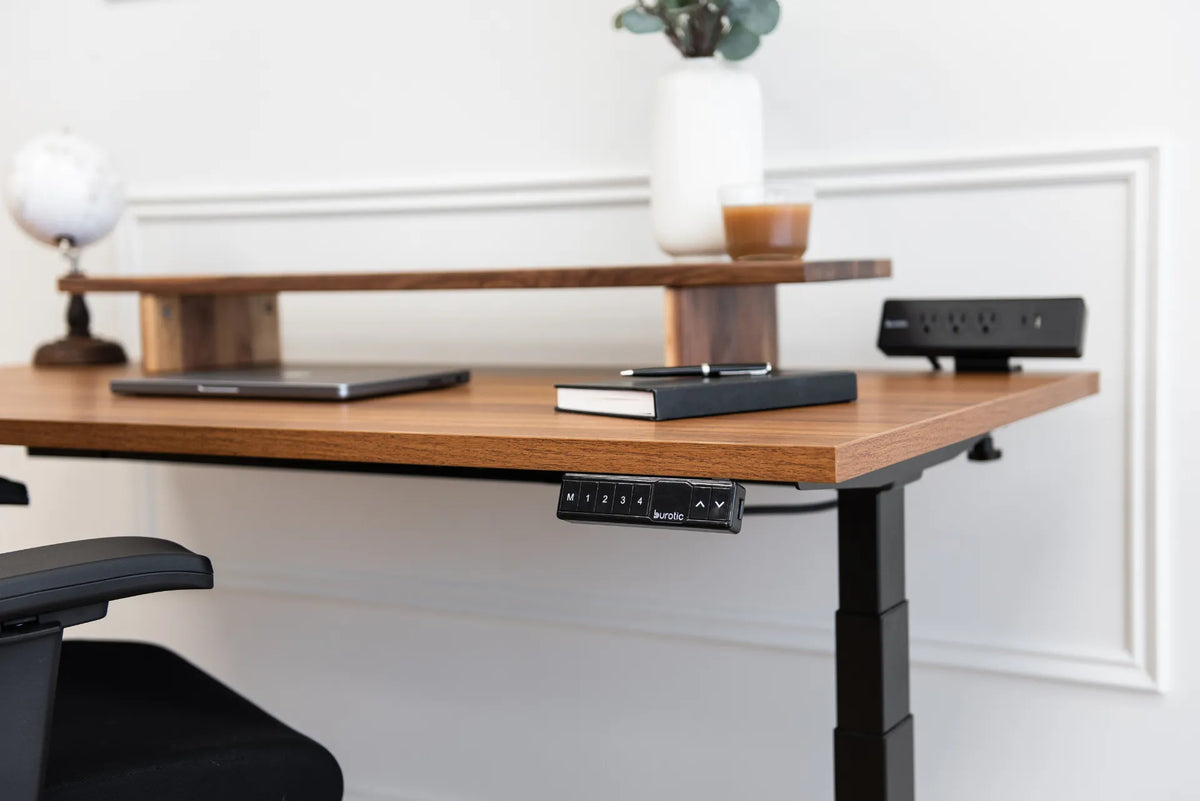
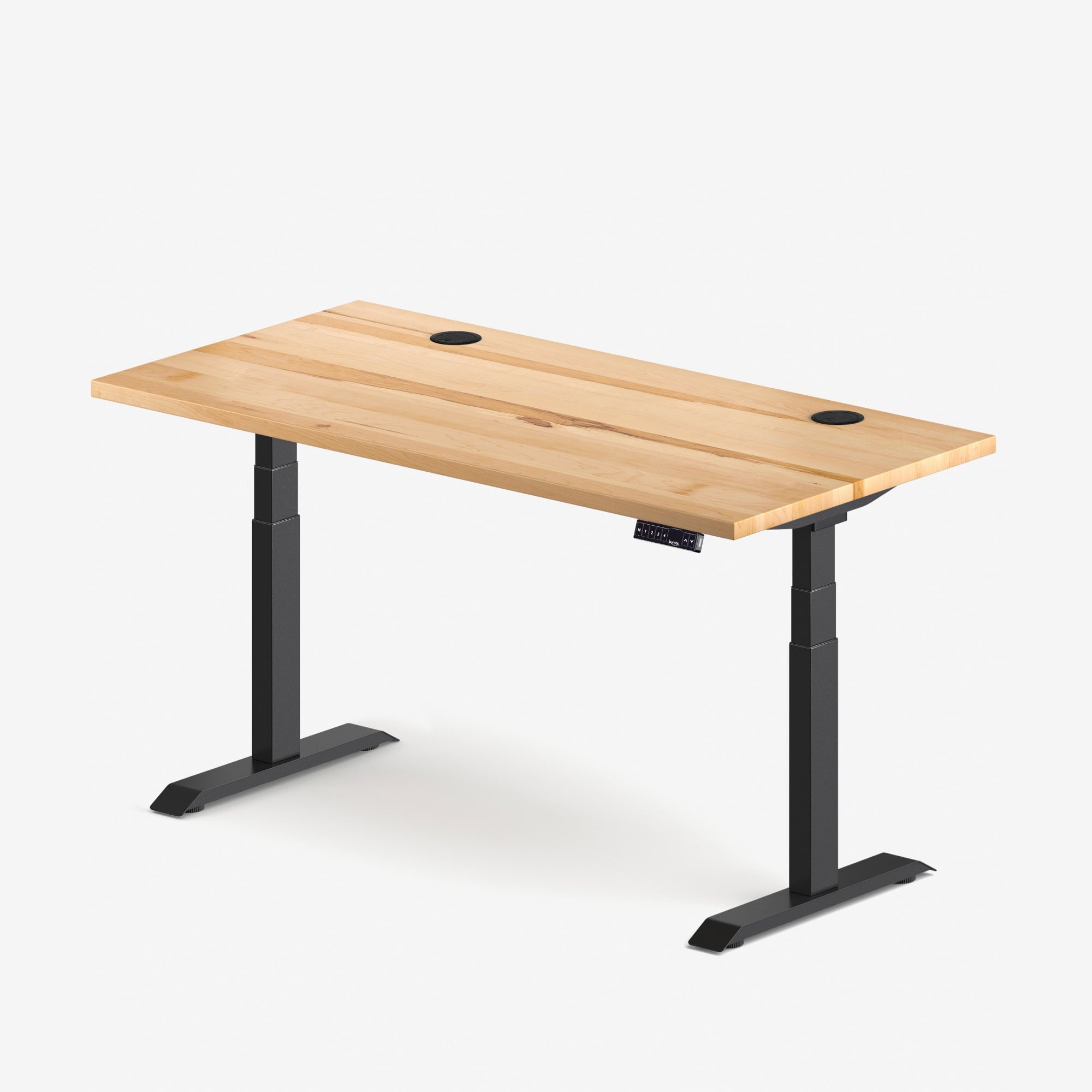
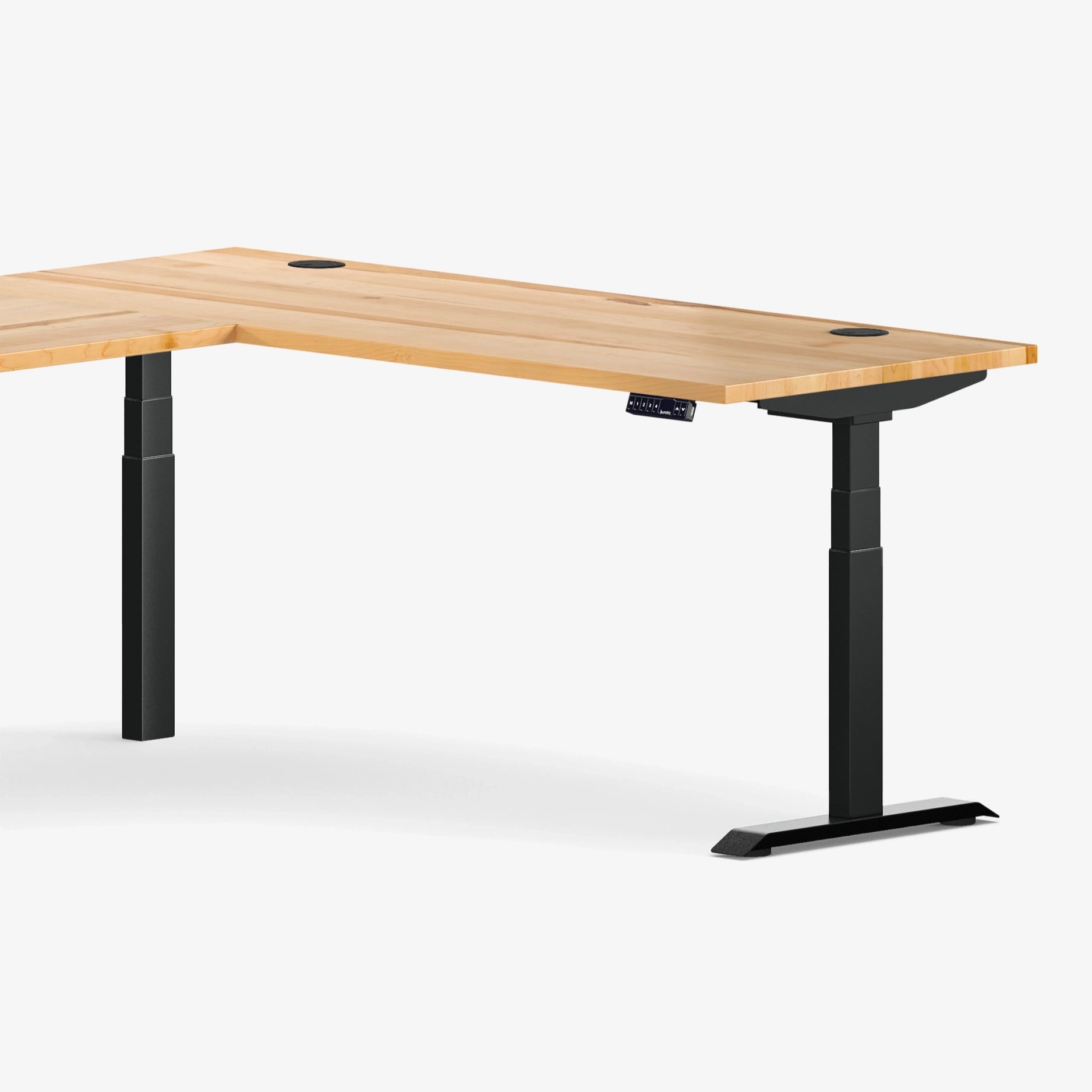
A solid wood top is built from pieces of real wood joined into a work surface. Species, board selection, grain, colour and finish influence its appearance. Even two tops made from the same species will not be identical. Natural variation is part of the material rather than a defect.
Solid wood can often be repaired or refinished when its finish becomes worn, provided the work follows the maker's recommendations. It can also react to moisture and seasonal humidity. Care instructions matter because cleaners, standing water, heat and direct sun may affect the finish or colour.
What is a laminate desk top?
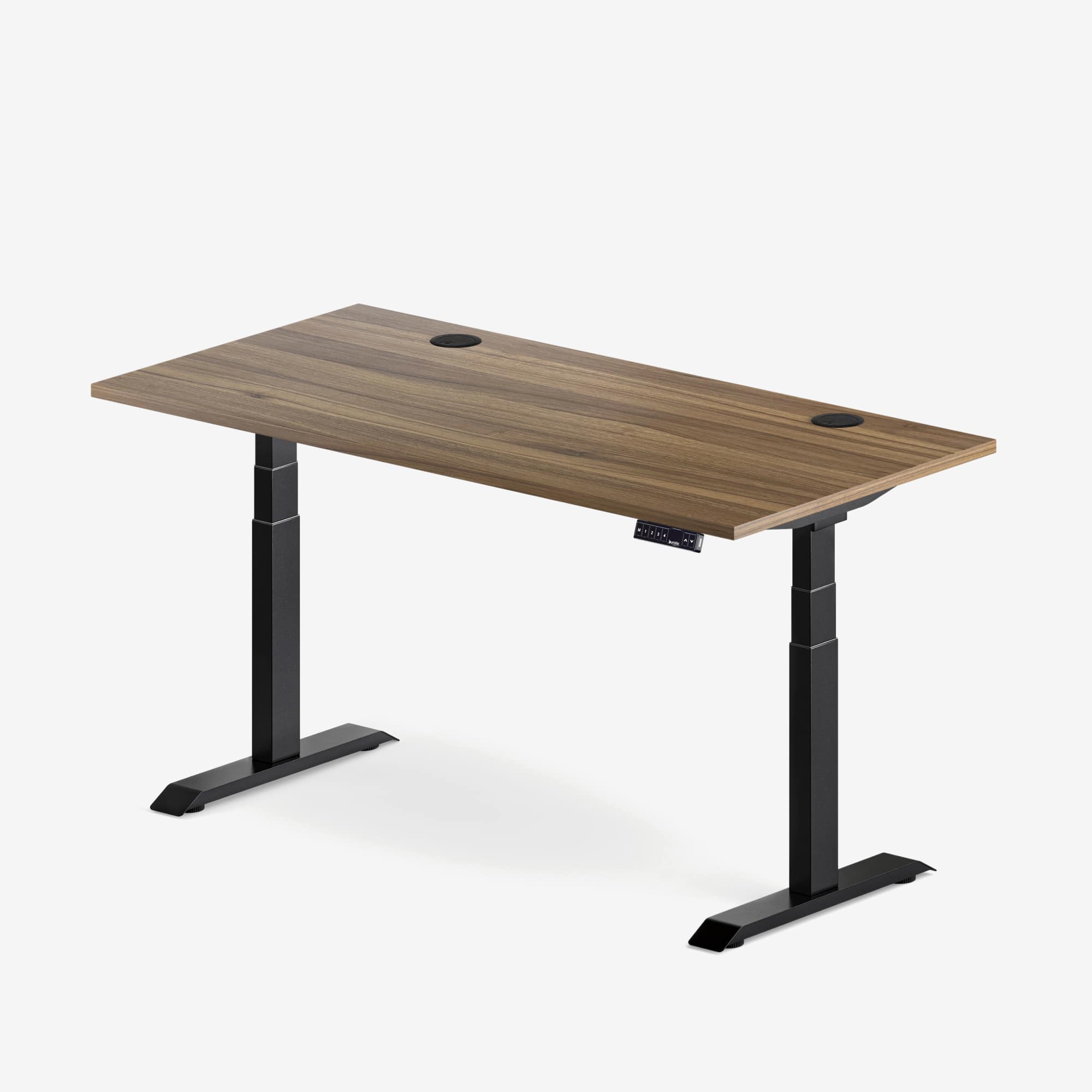
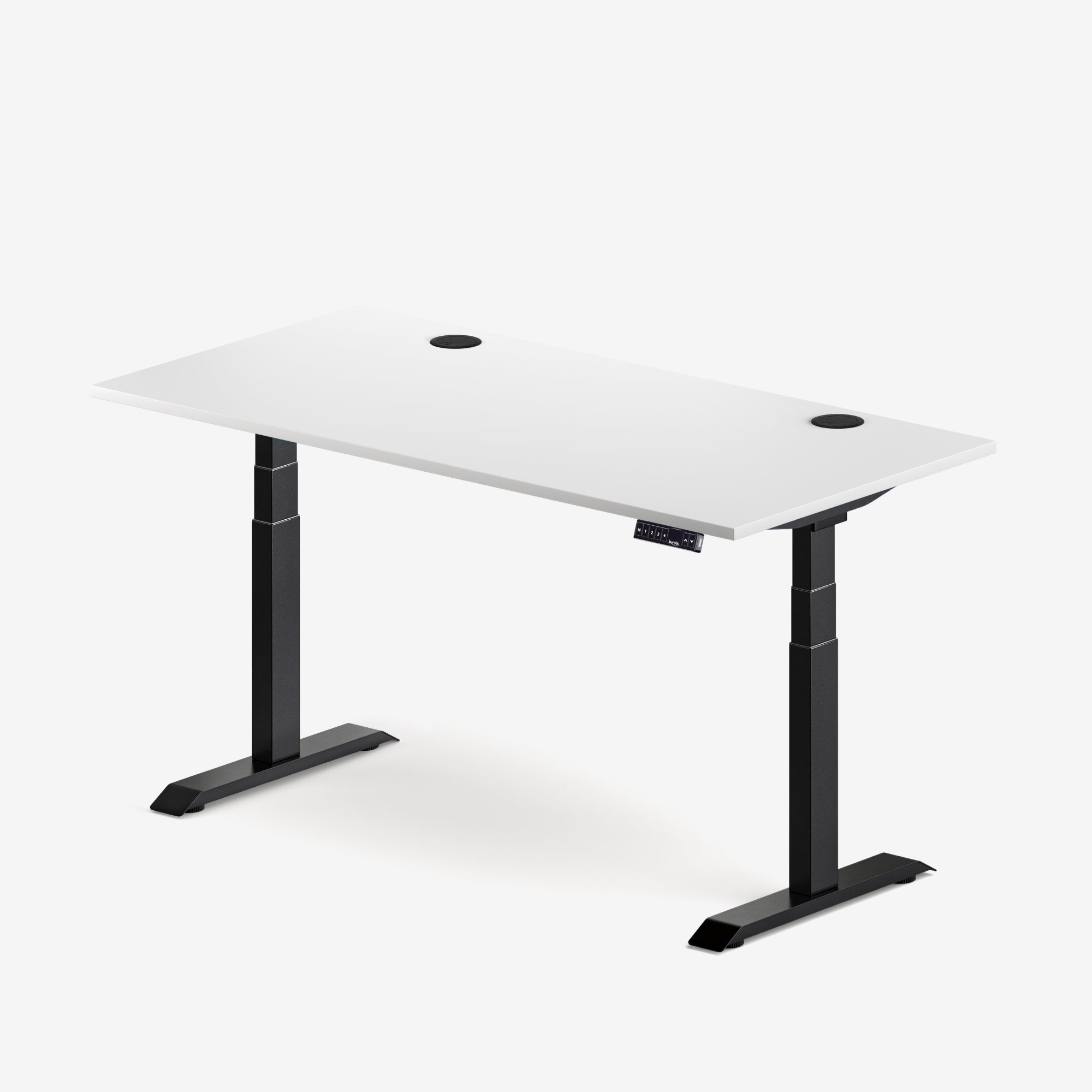
A laminate top uses a durable decorative surface bonded to a core. Construction varies, so do not treat every laminate as identical. The product page should explain the surface, core, edge treatment, dimensions and care requirements. A wood-look laminate is a visual pattern, not solid lumber.
Laminate is valued for consistency. Samples and product photos generally give a predictable impression of colour and pattern, although screens and lighting can still shift what you see. It is commonly easy to wipe clean and can make a large surface more accessible within a budget.
Appearance: natural variation or controlled consistency
Solid wood develops an individual character
Grain direction, knots and tonal changes make each solid wood top distinctive. Maple can read lighter and quieter; walnut commonly appears darker and more varied; cherry can change in colour over time. These are broad material tendencies, not promises about a specific top. Use current samples when the exact look matters.
Recent Canadian competitor coverage reflects continued interest in real wood. EffyDesk's July 24, 2026 comparison of solid wood standing desks in Canada emphasizes species and origin, while Ergonofis updated its wood shopping guide on April 29, 2026. These are competitor sources, so verify their product claims on their live pages before buying.
Laminate makes matching easier
Laminate is useful when several desks should look alike or when a predictable neutral surface is the priority. It can coordinate with storage and meeting tables without relying on natural boards to match. In a growing office, that repeatability may be more valuable than unique grain.
Daily care and resistance to office use
Both materials benefit from coasters, prompt spill cleanup and protection from concentrated heat. The difference is what happens after damage. A shallow mark in a solid wood finish may sometimes be repairable. A chip through a laminate surface usually requires a different repair approach and may remain visible. Never sand or refinish laminate as if it were solid wood.
For wood, use the cleaner and method recommended for the finish. Avoid assuming that a household wood product is suitable. Burotic's solid wood desk care guide explains a conservative routine. For laminate, follow the exact manufacturer's care information, particularly around seams and edges.
Weight and the adjustable frame
A large solid wood top can weigh more than a laminate top of similar dimensions. That weight is part of the moving load before any monitor, computer or accessory is added. Check the complete desk rating and the frame's compatible top dimensions. Do not compare capacity with equipment alone.
If you expect a 72-inch top, multiple displays or a desktop computer, list every component. The standing desk weight capacity guide shows how to calculate the total and keep a working margin. Correct fasteners and mounting points are equally important; follow the instructions supplied with the surface and frame.
Comfort and ergonomics depend on dimensions
Material does not determine whether a desk is ergonomic. Height range, depth, width, screen placement and input-device position matter more. CCOHS advises placing the keyboard and mouse so the shoulders can remain relaxed and the wrists neutral, with the standing work surface around elbow height. See its guidance on sit-stand workstations.
Edge shape and surface feel can still affect daily comfort. If your forearms contact the front edge, consider the profile and avoid sustained pressure. A desk pad may change feel and protect part of either surface, but it should not push the keyboard or mouse too far away.
Budget means more than the initial price
Laminate often lowers the initial cost of a full-size desk. That can leave room in the budget for a suitable chair, monitor support or cable management. Solid wood usually asks for a larger initial investment, with potential value in its natural appearance and repairability.
Compare like with like: identical dimensions, frame, controls, delivery and included hardware. Do not infer warranty or availability from the material category. Those details belong to the individual product and can change. Burotic currently offers both the Aspire Solid Wood Standing Desk and the Aspire Wood Laminate Standing Desk; use the live pages for current options.
Consider the room and the team
In a home office, a distinctive grain can become part of the room's design, while a neutral laminate may keep the workstation visually quiet. In a shared or commercial office, consistency can simplify future expansion and replacement. On the other hand, a solid wood surface may suit a client-facing office where material character is part of the experience.
Also consider who will maintain the desk. A surface that depends on careful product selection and prompt cleanup may not suit every shared environment. Write the approved cleaning method into the office routine rather than relying on memory. Material choice should support the people using the space, not create a maintenance burden they cannot realistically follow.
Which material fits common situations?
Choose solid wood when:
- Natural grain and individual character are priorities.
- You are comfortable with variation between samples and the final top.
- You want the possibility of future finish repair or refinishing.
- The frame and delivery route can accommodate the selected surface.
- You are prepared to follow material-specific care.
Choose laminate when:
- A consistent colour or pattern is important across several desks.
- You want a practical large surface at a more accessible entry point.
- Simple routine cleaning is a major priority.
- You prefer less natural variation.
- The expected office use does not require the repair options of solid wood.
Questions to ask before ordering
- What exactly is the surface and core construction?
- What are the finished dimensions, thickness and weight?
- Which frame sizes and fasteners are approved?
- What variation should be expected in colour and grain?
- Which cleaners and maintenance methods are permitted?
- How should scratches, chips or finish wear be handled?
- What warranty applies specifically to the top?
Make the choice from the way you work
Choose solid wood for a naturally individual surface when you value character, long-term care and possible refinishing. Choose laminate for visual consistency, uncomplicated maintenance and cost control. Then confirm that the exact size, weight and mounting requirements work with the adjustable frame.
The best approach is to compare physical samples in the room's lighting and read the current specifications for the exact configuration. Burotic's guide to solid wood desk benefits can help you explore the premium-material side of the decision before comparing live desk options.

Previous article
Large Standing Desk Buying Guide for Canadian Workspaces
Next article
Large Standing Desk Buying Guide for Canadian Workspaces