

Ergonomic Office Tips & Buying Guides

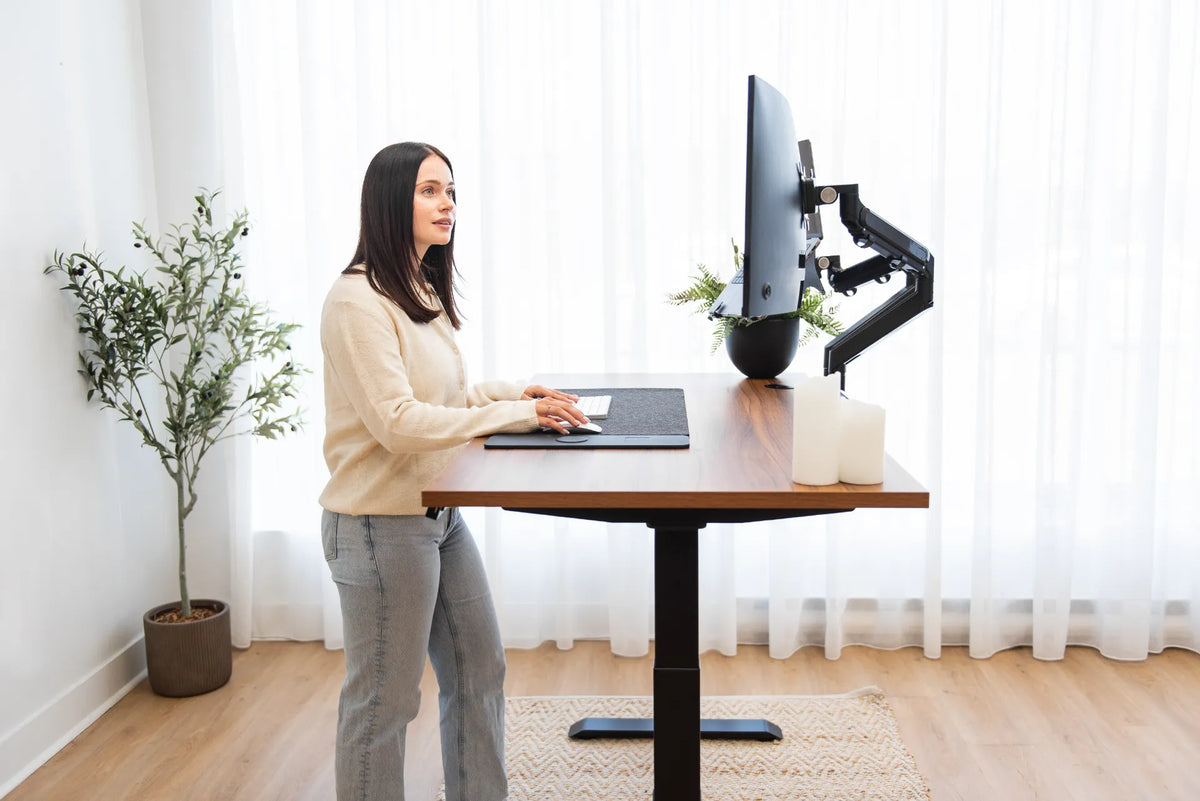
Woman seated in a black mesh ergonomic chair at a walnut standing desk with white keyboard, mouse and monitor on a wood riser

Should Your Office Chair Be Centred With Your Monitor?

For most computer work, align the chair, keyboard and primary monitor on one centreline, then adjust the desk layout around the task rather than the desk's geometric centre.

Read moreabout Should Your Office Chair Be Centred With Your Monitor?

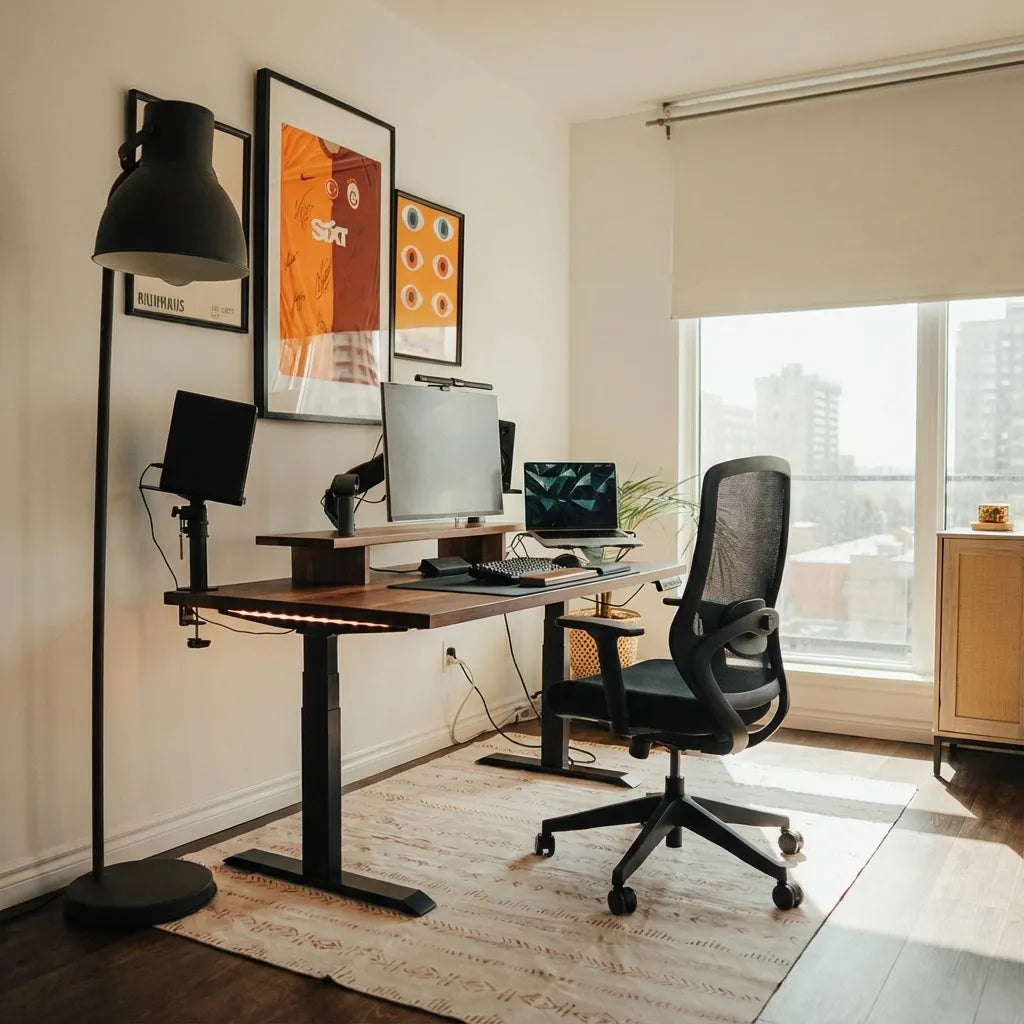
Person using a white keyboard and mouse with both forearms over a black desk pad on a walnut desktop

Should You Rest Your Forearms on the Desk While Typing?
Light forearm support can reduce shoulder effort, but the desk edge, keyboard position and chair height must let the wrists stay neutral and the shoulders relaxed.

Read moreabout Should You Rest Your Forearms on the Desk While Typing?

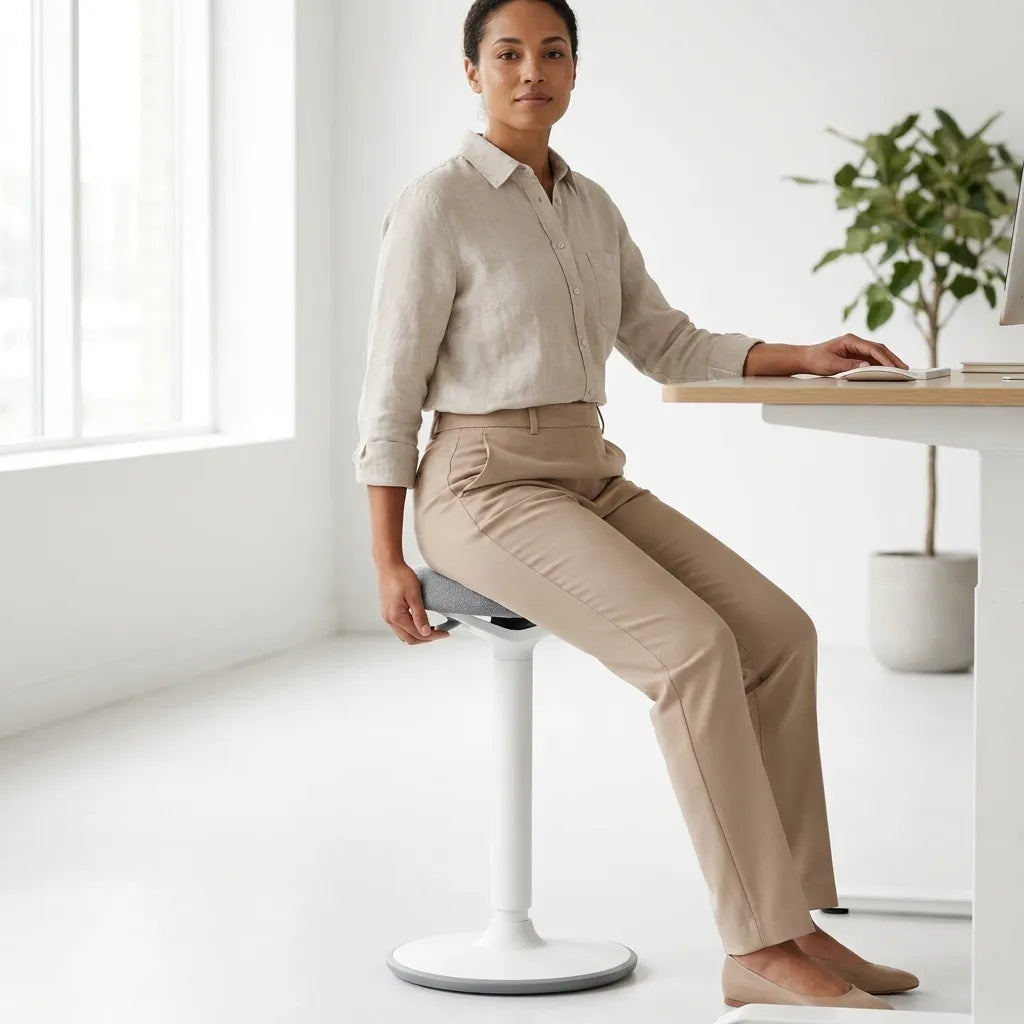
Person seated on a white backless stool without armrests at a white adjustable desk

Do You Need Armrests on an Office Chair?
Armrests can support the forearms and reduce shoulder effort, but only when they fit the user, desk, and task without blocking movement or access.

Read moreabout Do You Need Armrests on an Office Chair?

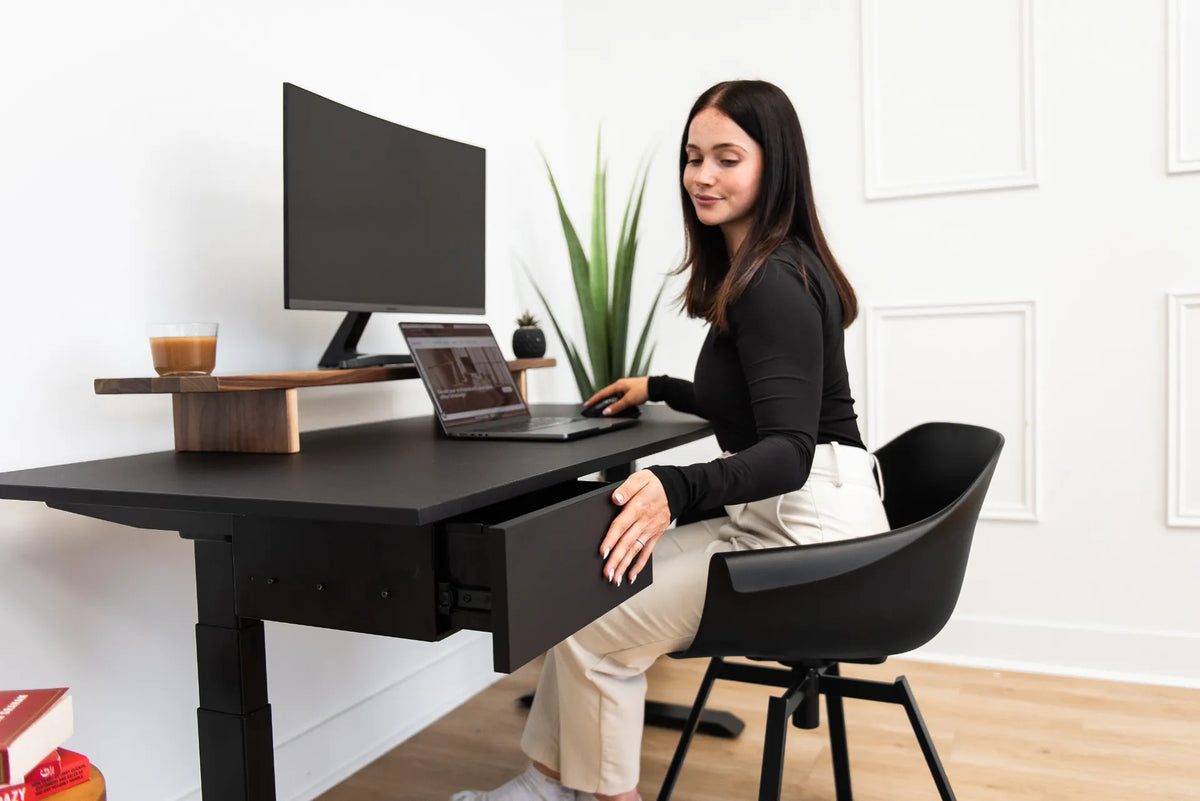
Woman seated in a black chair at a black desk while opening an under-desk drawer in a bright office

How Close Should Your Office Chair Be to Your Desk?

Learn how close to sit to your desk so your back stays supported, shoulders remain relaxed and the keyboard and mouse are within easy reach.

Read moreabout How Close Should Your Office Chair Be to Your Desk?

Woman standing at a light wood adjustable desk with a laptop, monitor riser and large screen in a warm home office

Should Your Elbows Be at 90 Degrees at a Standing Desk?
Use 90 degrees as a practical starting point, then adjust standing desk height so your shoulders relax, elbows stay close and wrists remain neutral.

Read moreabout Should Your Elbows Be at 90 Degrees at a Standing Desk?

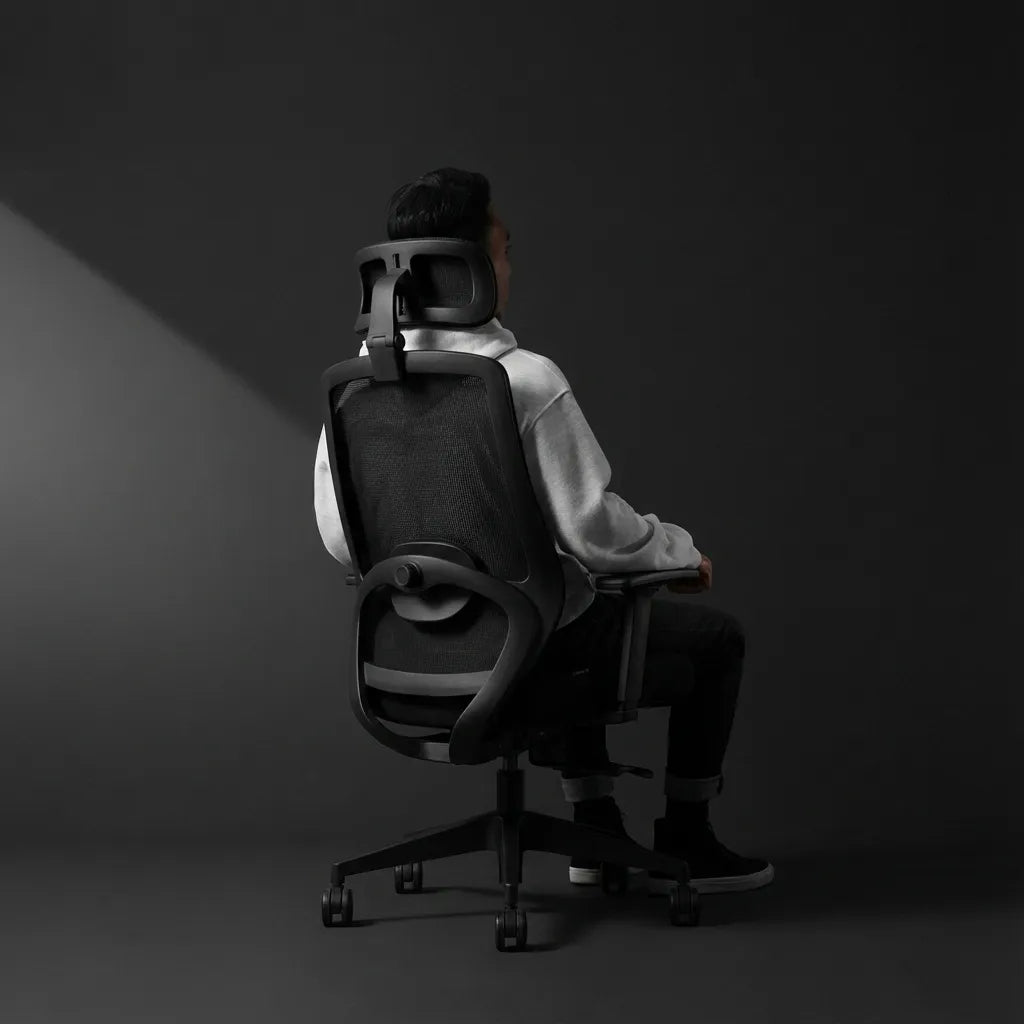
Person seated in a black mesh ergonomic chair with a headrest in a dark studio workspace

Where Should an Office Chair Headrest Sit?

Learn where an office chair headrest should sit, how to adjust it for upright work and reclined breaks, and how to spot a poor fit.
Read moreabout Where Should an Office Chair Headrest Sit?

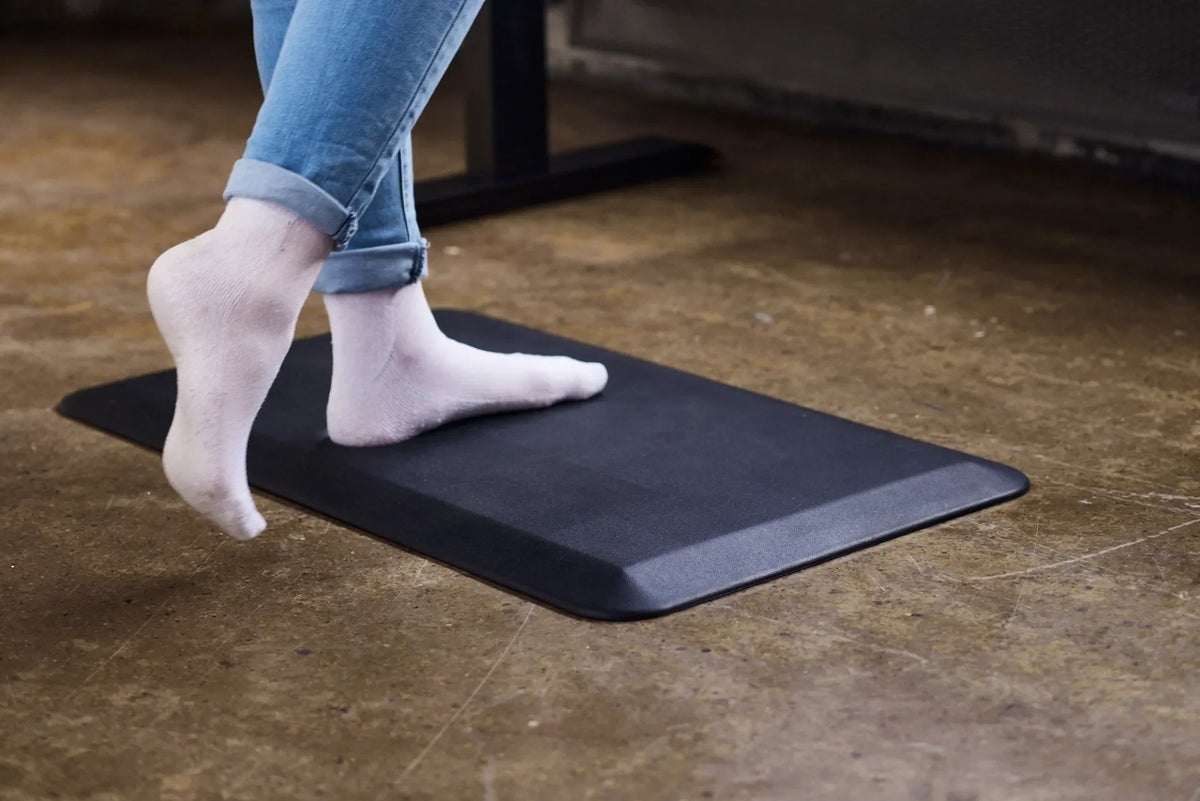
Close-up of socked feet shifting position on a black anti-fatigue mat beneath a standing desk on a concrete floor

Where Should Your Feet Be When Standing at a Desk?
Set your feet, desk height and standing surface for a stable but flexible posture, then use small weight shifts and regular position changes instead of standing still.

Read moreabout Where Should Your Feet Be When Standing at a Desk?

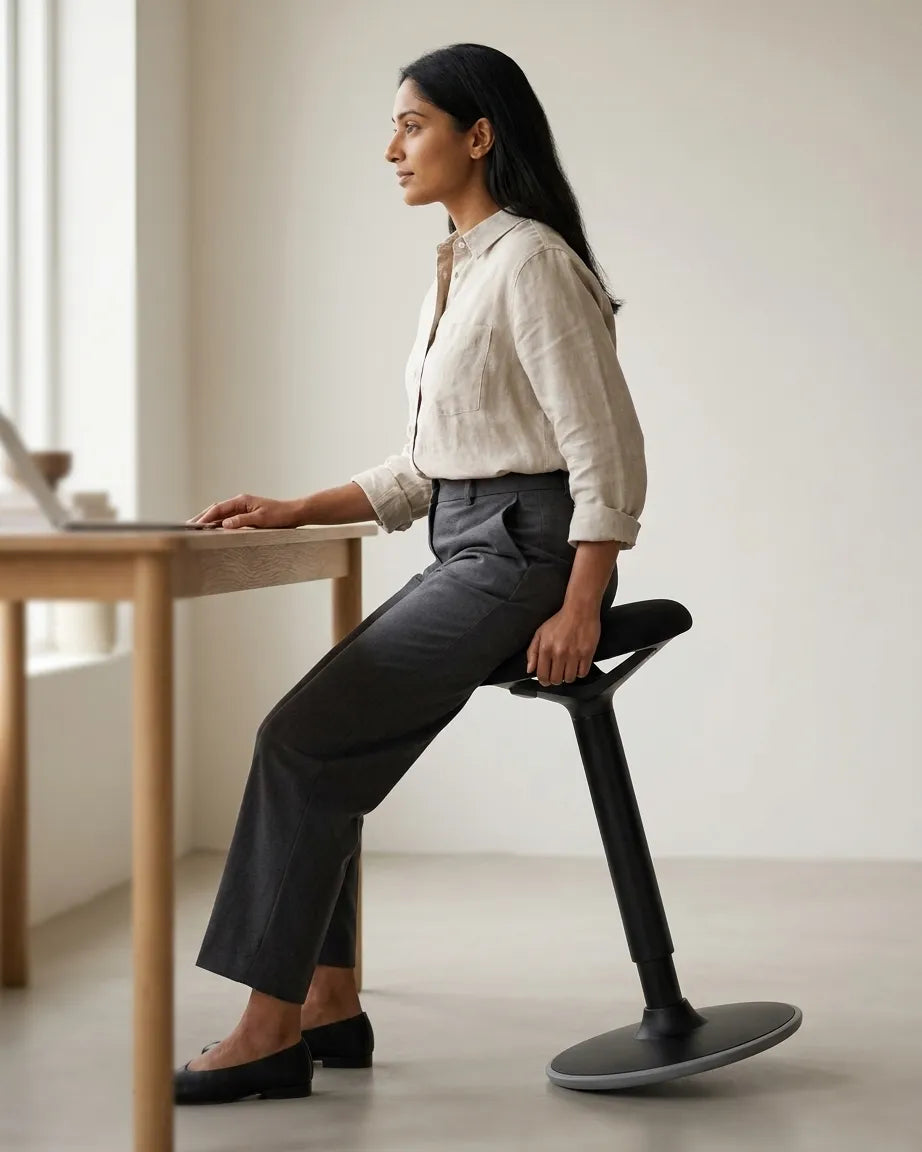
Woman seated side-on at a light wood desk on a black leaning stool with both feet supported on the floor

Should Your Knees Be at 90 Degrees When Sitting at a Desk?
A practical guide to knee angle, chair height, foot support and movement for a more comfortable seated workstation.

Read moreabout Should Your Knees Be at 90 Degrees When Sitting at a Desk?

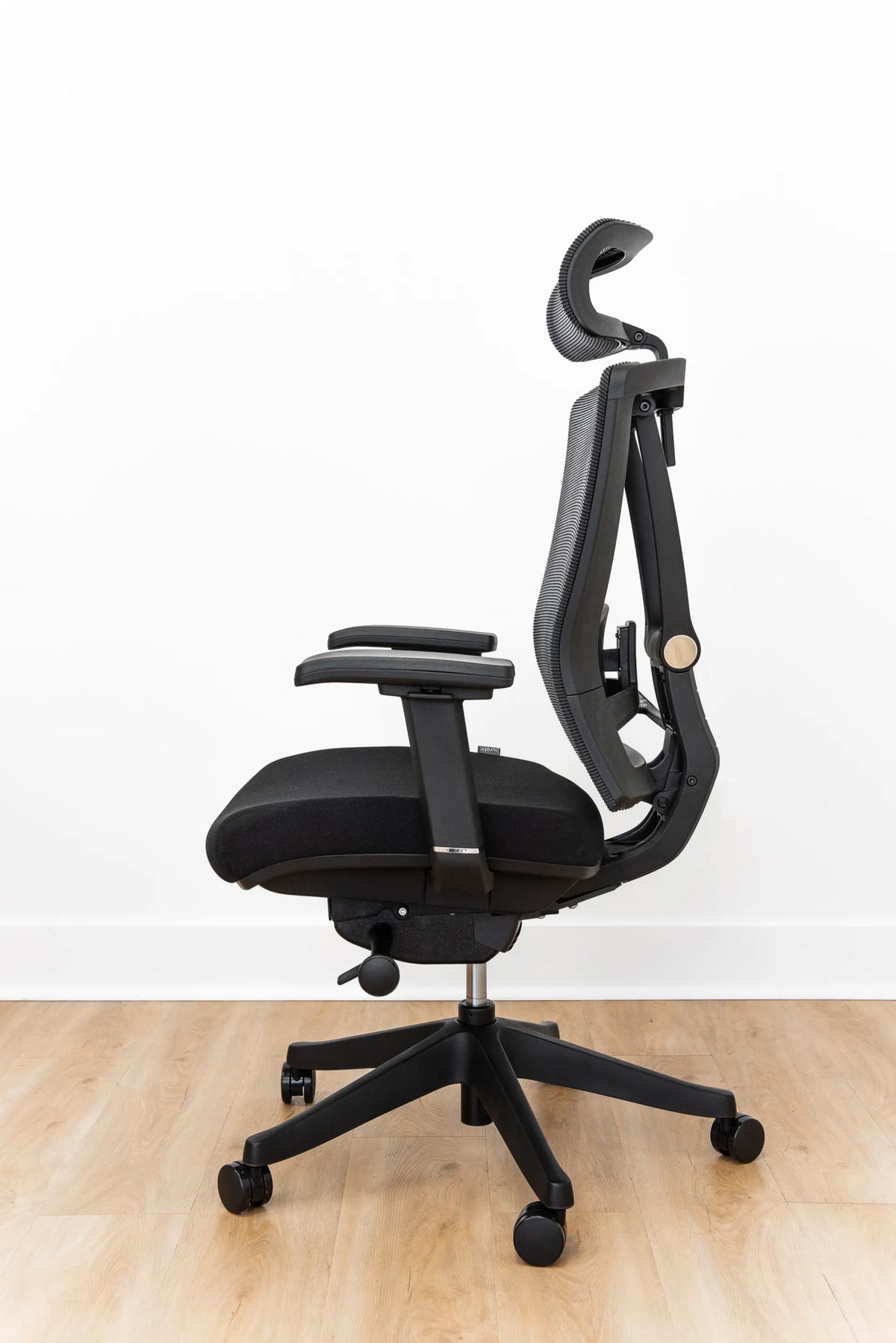
Side view of a black ergonomic office chair with padded armrests, a mesh back and headrest on a wood floor against a white wall

How High Should Office Chair Armrests Be?

Set office chair armrests to support relaxed shoulders and neutral forearms without blocking access to the desk. This practical guide explains the right starting point, common mistakes and how to coordinate armrests with chair and desk height.

Read moreabout How High Should Office Chair Armrests Be?